Plastic Design in Mechanical Engineering: Top 11 Reasons to Choose It as a Career
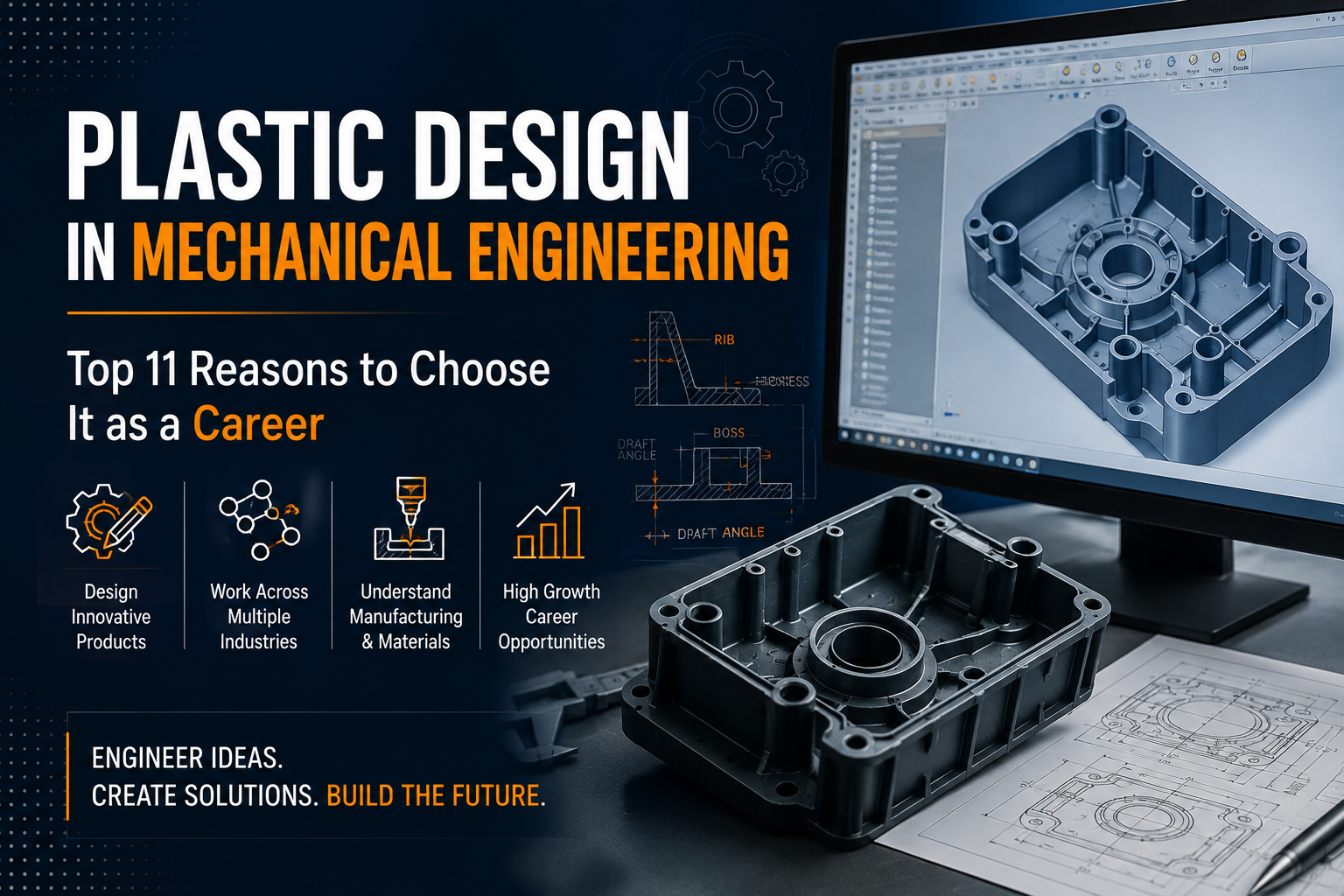
Walk through your home for just two minutes.
Look around carefully.
The TV remote in your hand.
The dashboard of your car.
The washing machine in your utility room.
The laptop on your desk.
The electric toothbrush in your bathroom.
The bottle cap you just opened.
What do all these products have in common?
Every one of them contains carefully engineered plastic components.
Behind those components is a Mechanical Engineer who understands Plastic Product Design.
Many Mechanical Engineering graduates focus only on learning CAD software. However, Plastic Design is now one of the fastest-growing and most valuable career paths in the engineering industry.
Today, industries such as Automotive, Electric Vehicles (EV), Consumer Electronics, Aerospace, Medical Devices, and Industrial Equipment need skilled Plastic Design Engineers who can design products that are functional, reliable, and easy to manufacture.
If you are planning a career in Mechanical Engineering and want to build skills that are in demand, Plastic Design is worth exploring.
Here are 11 reasons why Plastic Design could be the right career choice for you.
1. Plastic Components Are Everywhere
Modern products depend heavily on engineered plastic components because they are:
- Lightweight
- Durable
- Cost-effective
- Corrosion-resistant
- Easy to manufacture in large volumes
From automobiles to smartphones, almost every industry relies on plastic design engineers.
The demand isn’t limited to one sector—it’s everywhere.
2. Strong Demand Across Multiple Industries
Unlike niche engineering fields, Plastic Design skills are transferable across industries.
Career opportunities include:
- Automotive
- Electric Vehicles
- Aerospace
- Consumer Electronics
- Medical Devices
- White Goods & Home Appliances
- Industrial Equipment
- Packaging
- Consumer Products
This versatility gives engineers greater career flexibility.
3. Plastic Design Is More Than CAD
Many students believe Plastic Design simply means creating 3D models.
In reality, it involves engineering decisions such as:
- Wall Thickness
- Draft Angles
- Ribs
- Bosses
- Snap Fits
- Fillets
- Assembly
- Material Selection
- Manufacturability
A Plastic Design Engineer solves problems—not just creates geometry.
4. Manufacturing Knowledge Makes You Valuable
Design and manufacturing are inseparable.
An engineer who understands Injection Moulding, tooling constraints, and production processes creates designs that are easier to manufacture, reducing costs and improving quality.
Companies highly value engineers who think beyond CAD.
5. Industry 4.0 Is Increasing the Need for Product Designers
As manufacturing becomes smarter, products are becoming more sophisticated.
Modern engineering teams work with:
- Digital Twins
- Smart Manufacturing
- Automation
- Robotics
- Lightweight Design
- Sustainability
Plastic Design Engineers contribute directly to these innovations.
6. You Build Products People Use Every Day
One of the most satisfying aspects of this career is seeing your work become part of everyday life.
Imagine designing components for:
- A new electric vehicle
- Medical equipment
- Smart home devices
- Consumer electronics
- Industrial machinery
Every successful product starts as an engineering idea.
7. Recruiters Value Practical Engineering Skills
Recruiters increasingly look beyond academic scores and software certifications.
They want engineers who can:
- Explain design decisions
- Understand manufacturing
- Solve engineering problems
- Present project work confidently
- Collaborate with teams
Hands-on project experience often makes a stronger impression than certificates alone.
8. Excellent Career Growth
Plastic Design offers diverse career paths.
You may begin as a:
- Graduate Engineer Trainee
and progress to:
- Plastic Design Engineer
- Product Design Engineer
- Senior Design Engineer
- Lead Engineer
- Project Manager
- Product Development Specialist
- Engineering Manager
Continuous learning opens doors to leadership roles.
9. Global Career Opportunities
Plastic Design standards are widely used across international industries.
Engineers with experience in product design and manufacturing principles can find opportunities with multinational companies serving global markets.
10. Every Project Is Different
No two products are exactly alike.
One week you may design:
- Automotive interior components
The next:
- Medical device housings
Then:
- Consumer electronics
The work stays varied, engaging, and intellectually rewarding.
11. You’re Solving Real Engineering Problems
The best part of Plastic Design isn’t the software.
It’s the engineering.
Every design requires balancing:
- Strength
- Weight
- Cost
- Functionality
- Manufacturing
- Assembly
- User experience
Every successful component represents hundreds of thoughtful engineering decisions.
That’s what makes this profession both challenging and fulfilling.
Essential Skills Every Plastic Design Engineer Should Build
Technical knowledge is important, but long-term success comes from combining engineering principles with practical experience.
Focus on developing:
- CAD software proficiency (CATIA, NX, Creo, SolidWorks)
- Plastic Product Design principles
- Injection Moulding fundamentals
- GD&T
- Engineering Drawing interpretation
- Material Selection
- Design for Manufacturing (DFM)
- Problem-solving skills
- Communication and presentation skills
- Portfolio of real engineering projects
Is Plastic Design the Right Career for You?
If you enjoy:
- Designing products
- Solving engineering challenges
- Understanding manufacturing
- Working with advanced technologies
- Building innovative solutions
Plastic Design can be a highly rewarding career within Mechanical Engineering.
The most successful engineers never stop learning. They combine strong fundamentals, practical exposure, and curiosity to create products that improve everyday life.
Final Thoughts
Plastic Design is no longer a niche specialization—it is a critical part of modern product development.
As industries continue to innovate in Automotive, Electric Vehicles, Aerospace, Consumer Electronics, and Medical Devices, the need for engineers who can design practical, manufacturable, and reliable plastic components will continue to grow.
Whether you’re a Mechanical Engineering student, a recent graduate, or a working professional looking to upskill, understanding Plastic Design can open the door to exciting opportunities and meaningful engineering work.
The next time you pick up a TV remote, open your laptop, or drive your car, remember:
Someone engineered every curve, every rib, every snap fit, and every mounting feature before that product reached your hands.
Perhaps one day, that engineer could be you.